

Measuring your kitchen sink might seem simple, but getting it right is crucial for a perfect fit. Whether you’re replacing an old sink or planning a brand-new kitchen, knowing exactly how to measure it saves you time, money, and frustration.
In this guide, you’ll learn easy steps to measure your kitchen sink accurately. By the end, you’ll feel confident making the best choice for your space. Ready to avoid costly mistakes? Let’s dive in and get those measurements spot on!

Credit: nomadicsupply.com
Tools Needed
Measuring a kitchen sink needs the right tools. These tools help get exact sizes and avoid mistakes. Having the right tools makes the job easier and faster.
Use simple tools that you can find at home or buy cheaply. Each tool serves a specific purpose in measuring the sink.
Measuring Tape
A measuring tape is essential for any sink measurement. It helps measure length, width, and depth. Choose a tape that is flexible and long enough.
Ruler Or Straight Edge
A ruler or straight edge helps check straight lines and edges. It ensures your measurements are accurate and even. Use it for smaller or detailed parts.
Marker Or Pencil
Use a marker or pencil to mark points on the sink or countertop. These marks guide where to measure or cut. Choose a pencil for easy erasing.
Level
A level checks if the sink area is even. It helps prevent water from pooling or draining poorly. Place it on the sink edges for a quick check.
Notebook Or Measurement Sheet
Keep a notebook or sheet to write down all measurements. This keeps your data organized and easy to use later. Note dimensions clearly and double-check them.
Types Of Kitchen Sinks
Kitchen sinks come in various styles. Each type fits different kitchen designs and needs. Choosing the right sink affects how you measure it and install it. Understanding the main types helps you pick the best option for your space.
Top-mount Sinks
Top-mount sinks sit on top of the countertop. They have a rim that rests above the counter surface. These sinks are easier to install and replace. Measuring requires the sink’s outer edges plus the cutout size on the countertop.
Undermount Sinks
Undermount sinks install below the countertop surface. They create a smooth look with no rim showing. These sinks need precise measurements for the countertop cutout. Measuring includes the sink’s basin size and the exact cutout dimensions.
Farmhouse Sinks
Farmhouse sinks, also called apron-front sinks, have a large front panel. They extend slightly past the edge of the countertop. Measuring involves the sink’s overall width, depth, and the exposed front panel. These sinks often need custom cabinet openings.
Measuring Sink Dimensions
Measuring your kitchen sink accurately is key to ensuring a perfect fit during installation or replacement. Getting the dimensions right can prevent costly mistakes and save you time. Let’s look closely at how to measure the main dimensions: width, length, and depth.
Width Measurement
Start by measuring the width of your sink, which is the distance from one side to the other across the front. Use a tape measure and keep it straight to avoid inaccurate readings. Remember, the width measurement is crucial if your sink will fit into a pre-cut countertop opening.
Make a note of whether you’re measuring the outer edge or the basin’s inside edge. Sometimes manufacturers list both, so knowing which one you have is important for buying the right sink or accessories like cutting boards and drain racks.
Length Measurement
Length refers to the measurement from the front of the sink to the back. Place your tape measure at the outer edge of the front and extend it to the outer edge of the back. This helps you understand how much space the sink will take up on your countertop from front to back.
Keep in mind that some sinks have a lip or rim that adds to the overall length. Failing to account for this can lead to a sink that doesn’t sit flush or fits awkwardly in the space.
Depth Measurement
Depth is the vertical measurement from the top of the sink to the bottom of the basin. It determines how much water your sink can hold and affects how comfortable it is to use. Use your tape measure to check the deepest point inside the basin.
Are you someone who washes large pots or does a lot of food prep? A deeper sink might work better for you. But remember, very deep sinks can sometimes strain your back during use, so consider your daily kitchen habits when deciding.
Measuring Countertop Cutout
Measuring the countertop cutout is a crucial step before installing a new kitchen sink. It ensures your sink fits perfectly without causing damage or requiring extra modifications. Accurate measurements save you time, money, and the frustration of a poor fit.
Checking Existing Cutout Size
Start by cleaning the countertop around the current sink cutout. Dust and debris can affect your measurements, so a clear surface is essential.
Use a tape measure or ruler to measure the width and length of the cutout. Measure from the inside edges of the opening, not the countertop surface. Write down these numbers carefully.
Don’t forget to check the cutout’s shape—whether it’s rectangular, oval, or custom-shaped. This affects the type of sink you can install. Have you noticed any irregular edges or damage? That can change your approach.
Determining New Cutout Dimensions
If you’re installing a sink where there wasn’t one before, you’ll need to decide on the cutout size based on your sink’s specifications. Check the sink’s installation guide for recommended cutout dimensions.
Mark the outline on your countertop using a pencil and a template or the sink itself. Double-check all measurements before cutting—measure twice, cut once is a rule worth following here.
Consider the thickness of the countertop material and the sink rim design. Will the sink sit flush or drop in? This affects how much space you need around the cutout. What’s your countertop made of? Hard materials like granite require special tools for cutting.
Measuring Plumbing And Drain Location
Measure the width and length of the kitchen sink’s basin to find its size. Check the drain hole’s position to match plumbing and ensure proper fit. Accurate measurements help avoid leaks and make installation easier.
Measuring the plumbing and drain location is crucial for sink installation. Proper measurements ensure that your new sink fits perfectly. This step prevents costly mistakes and saves time. Below, we explore key aspects of this process.Understanding Sink Drain Placement
Locate the existing drain under your sink. Note its position relative to the sink’s center. This helps determine if adjustments are needed for the new sink. Use a measuring tape for accuracy. Check the distance from the wall to the drain. This distance affects the sink’s fit and plumbing connection.Measuring The Plumbing Lines
Identify hot and cold water supply lines. Measure their distance from the wall. Ensure they align with your new sink’s connections. Check the height of these lines from the floor. This prevents potential installation issues.Identifying The P-trap Position
Find the P-trap beneath the sink. Measure its distance from the wall. Ensure compatibility with the new sink’s drain. Note the height of the P-trap from the floor. This ensures proper drainage and prevents clogs.Checking For Additional Plumbing Features
Look for shut-off valves and other plumbing features. Measure their placement relative to the sink. Ensure they are accessible after installation. This ensures easy maintenance and repair. Proper measurements make installation smooth and efficient. Accurate measurements save time and prevent unnecessary adjustments.Tips For Accurate Measurements
Getting the right measurements for your kitchen sink can save you from costly mistakes and frustration. Taking accurate measurements ensures your sink fits perfectly and functions well in your kitchen space. Here are some practical tips to help you measure with confidence and precision.
Use The Right Tools For Precise Measurements
A steel tape measure gives you the most accurate results compared to cloth or plastic tapes. It won’t stretch or bend easily, which means your numbers will be more reliable.
Also, having a straight edge or ruler helps keep your tape measure aligned correctly along edges. This reduces errors caused by measuring at angles.
Measure The Sink And The Cabinet Opening
Don’t just measure the sink alone. You need to measure the cabinet opening where the sink will sit too. This includes width, length, and depth inside the cabinet.
Think about the lip of the sink and how it overlaps the countertop. That can affect how much space you actually have for installation.
Double Check All Measurements Before Buying
After you take your initial measurements, measure everything again from a different angle or with a fresh mindset. You’ll often catch small mistakes this way.
Ask yourself, “Does this sink size really fit the cabinet and countertop cutout?” If the numbers don’t add up perfectly, rethink your options.
Account For Plumbing And Faucet Placement
Consider where your faucet and plumbing lines will go before finalizing measurements. The sink cutout must leave enough room for these fixtures.
If you ignore faucet placement, you might end up with a sink that’s hard to install or use. Plan the space around pipes, drains, and water lines carefully.
Mark Dimensions Clearly For Reference
Write down your measurements clearly on paper or take photos with dimensions marked. This helps when shopping or discussing options with a professional.
Visual reminders reduce confusion and help you stay consistent. You won’t have to guess or re-measure multiple times.
Common Mistakes To Avoid
Measuring a kitchen sink requires careful attention to avoid errors. Skipping measurements for depth or ignoring faucet space can lead to poor fit. Always double-check dimensions before buying to save time and money.
When measuring a kitchen sink, precision is crucial. A small mistake can lead to big problems. From leaks to mismatched sizes, errors can be costly. Understanding common mistakes helps you avoid them and save time. Let’s explore some frequent errors and how to steer clear of them.Ignoring The Sink’s Mounting Style
Different sinks have different mounting styles. Undermount, top-mount, and farmhouse are common types. Each requires specific measurements. Ignoring this leads to inaccurate dimensions. Measure according to the mounting style of your sink.Overlooking Countertop Space
Countertop space is vital for sink installation. Measure the available space before choosing a sink. A sink that’s too big can overwhelm your counter area. Ensure there’s enough space for the sink and surrounding areas.Forgetting To Measure Depth
Sink depth affects usability and installation. A deep sink may not fit all counters. Always measure the depth of your space. Compare it with the sink’s depth to ensure compatibility.Neglecting To Measure Plumbing Connections
Plumbing connections are crucial for sink installation. Incorrect measurements can lead to leaks. Measure the distance to water supply and drain pipes. Ensure your new sink aligns with existing plumbing.Not Considering Accessories
Accessories like cutting boards and strainers need space. If you plan to use them, factor them into your measurements. They can impact the overall size needed for your sink.Using Incorrect Tools
Accurate measurements need the right tools. A simple tape measure is usually sufficient. Ensure it’s reliable and in good condition. Incorrect tools can result in incorrect measurements. Avoid these common mistakes to ensure a smooth sink installation. Proper measurements ensure a perfect fit and function for your kitchen sink.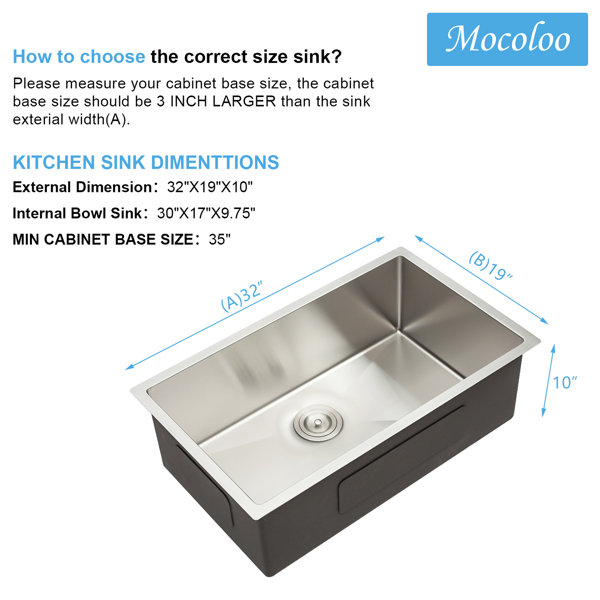
Credit: www.wayfair.com

Credit: www.shopabunda.com
Frequently Asked Questions
How Do I Measure My Kitchen Sink Dimensions?
Measure the length and width of your sink’s top edges. Use a tape measure from outer edge to outer edge. Note the depth by measuring from the bottom to the top rim inside the basin. Accurate dimensions help with sink replacement or fitting.
What Tools Are Needed To Measure A Kitchen Sink?
You only need a tape measure and a notepad. A tape measure gives precise length, width, and depth. A notepad helps record measurements. Optional: a level to check sink alignment. These simple tools ensure accurate sink measurement.
How To Measure A Kitchen Sink For Replacement?
Remove any fixtures and clean the sink area. Measure length, width, and depth accurately. Check the number and position of mounting clips or holes. Compare these with your new sink specifications. Proper measurement prevents fitting issues during replacement.
Can I Measure A Kitchen Sink Without Removing It?
Yes, you can measure your sink while it’s installed. Use a tape measure to gauge length, width, and depth. Measure visible edges carefully. Avoid disturbing plumbing. This method is quick and effective for most sink types.
Conclusion
Measuring a kitchen sink is simple with the right steps. Start by noting the width, length, and depth clearly. Double-check your numbers to avoid mistakes. Use a tape measure for accuracy. Remember to measure the drain and faucet areas too.
Taking your time ensures a good fit. Accurate measurements help you choose the perfect sink. This saves time and money during installation. Now, you can shop confidently for your kitchen sink.