
Imagine you’re in the middle of a sweltering summer day, and the heat is unbearable. You need a quick solution to cool down your space, and that’s where portable air conditioners come into play.
These handy devices promise relief without the hassle of installing a permanent unit. But how do they actually work? Understanding the mechanics behind portable air conditioners can empower you to make informed decisions when cooling your home or office. As you dive deeper into their operation, you’ll discover how they manage to turn hot air into a refreshing breeze.
This knowledge not only helps you choose the right model but also maximizes efficiency and comfort in your living space. Ready to uncover the secrets behind their cooling magic? Let’s explore how portable air conditioners transform your environment and bring you the comfort you crave.
Basics Of Portable Air Conditioners
Portable air conditioners offer a quick way to cool down any room. They are a popular choice for homes without central air systems. These units are small, easy to move, and simple to install. Understanding how they work can help you choose the right model for your needs. Let’s explore the basics of portable air conditioners and discover their advantages.
How Portable Air Conditioners Function
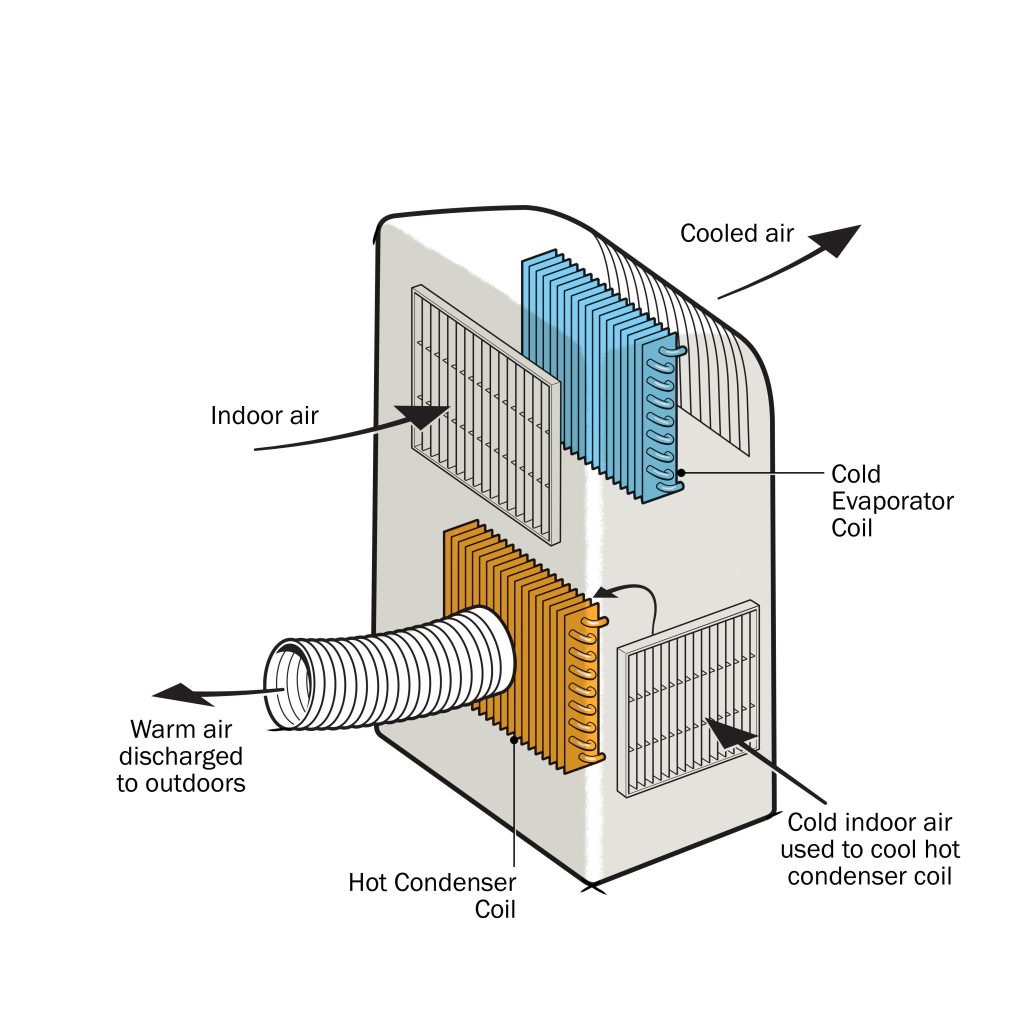
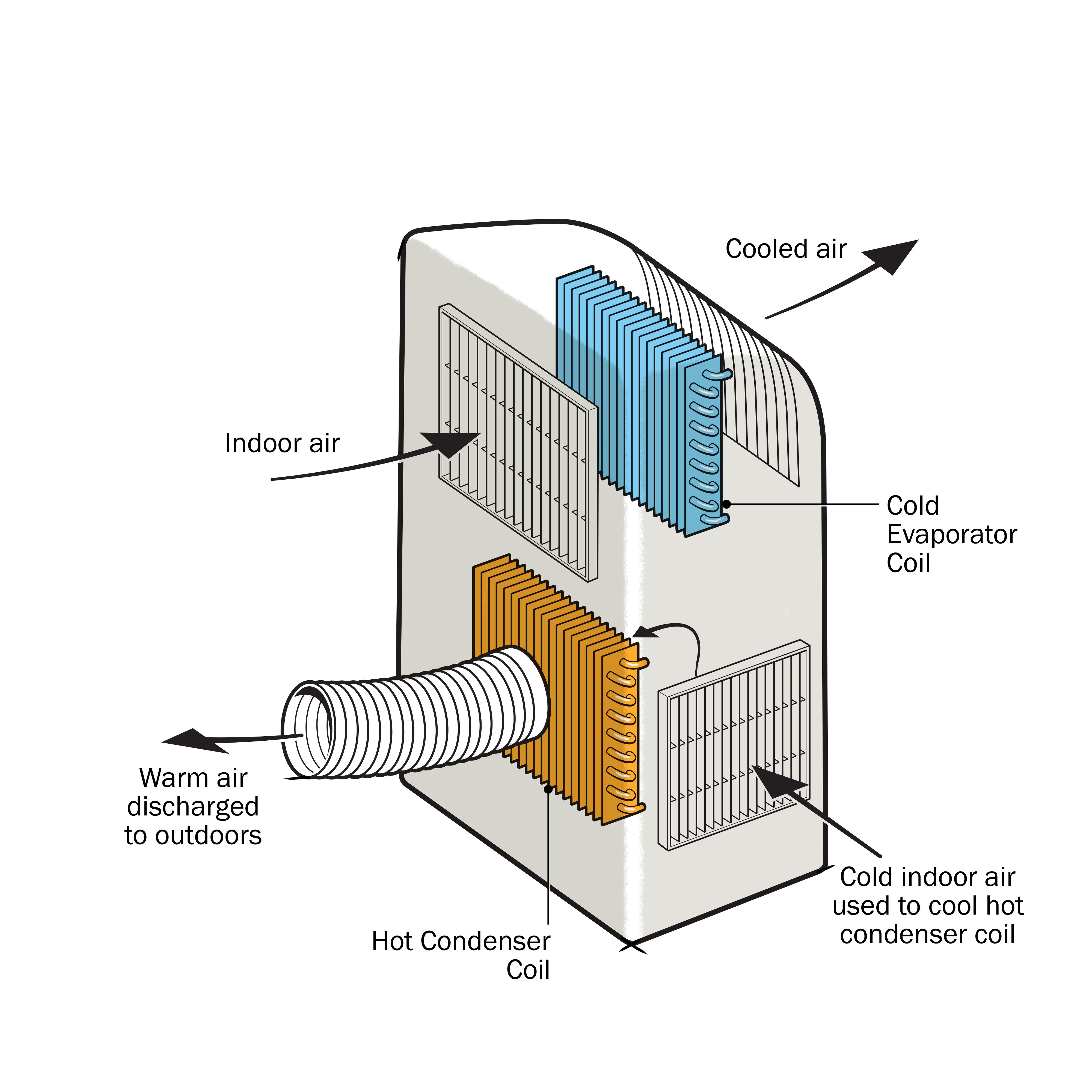
Portable air conditioners pull in warm air and cool it. The cooled air is then circulated back into the room. They expel the warm air outside using a hose. This process is crucial for effective cooling.
Key Components Of Portable Air Conditioners
These units have several essential parts. The compressor compresses refrigerant to create cool air. The evaporator coil absorbs heat from the air. The condenser coil expels heat outside. Fans distribute cooled air throughout the room. Each part plays a vital role in cooling.
Installation Requirements
Installation involves placing the unit near a window or vent. The exhaust hose needs to be secured outside. This setup ensures proper ventilation. Portable air conditioners require minimal setup compared to other cooling systems.
Energy Efficiency And Cooling Capacity
Portable air conditioners vary in energy efficiency. Check the Energy Efficiency Ratio (EER) before buying. Higher EER means better energy savings. Cooling capacity is measured in BTUs. Select a unit with the right BTU for your room size.
Maintenance Tips
Regular maintenance extends the life of your unit. Clean filters every two weeks. Check the hose and vents for blockages. Proper care ensures optimal performance.
Key Components
Portable air conditioners are essential for cooling spaces. Understanding their key components is crucial. These parts work together to provide relief from the heat. Let’s dive into the main components of portable air conditioners.
Compressor
The compressor is the heart of the air conditioner. It pumps refrigerant through the system. This process helps in cooling the air. The compressor compresses the refrigerant, increasing its pressure and temperature. Then, it moves to the next stage of cooling.
Evaporator
The evaporator coil plays a vital role in cooling. It absorbs heat from the room air. The refrigerant inside the coil evaporates, taking the heat with it. The result is cooler air blown back into the room.
Condenser
The condenser coil releases the absorbed heat outside. After the refrigerant leaves the evaporator, it moves to the condenser. Here, it changes back into a liquid. This releases the heat outdoors, making the room cool.
Refrigerant
The refrigerant is the cooling agent in the system. It circulates through the coils, absorbing and releasing heat. Without refrigerant, the cooling process wouldn’t work. It’s a crucial component in any air conditioner.
Cooling Process
The cooling process of portable air conditioners is quite fascinating. These devices are designed to absorb heat and expel it outside. They also reduce humidity in the air, making your room comfortable. Let’s dive into how each part of the cooling process works.
Heat Absorption
Portable air conditioners pull warm air from the room. This air passes over cooling coils within the unit. The coils contain a refrigerant that absorbs the heat. As a result, the air becomes cool and refreshing. The now cool air is then circulated back into the room.
Heat Exhaustion
Once the heat is absorbed, it needs to be removed. Portable air conditioners use a hose to vent this heat outside. This ensures your room doesn’t just get cool, but stays that way. The heat exhaust process is essential for maintaining a pleasant indoor temperature.
Dehumidification
Humidity can make a room feel hotter. Portable air conditioners also dehumidify the air. They remove excess moisture, making the air drier and more comfortable. This feature is especially useful in humid climates. It ensures that both temperature and humidity are kept in check.
Single-hose Vs Dual-hose Models
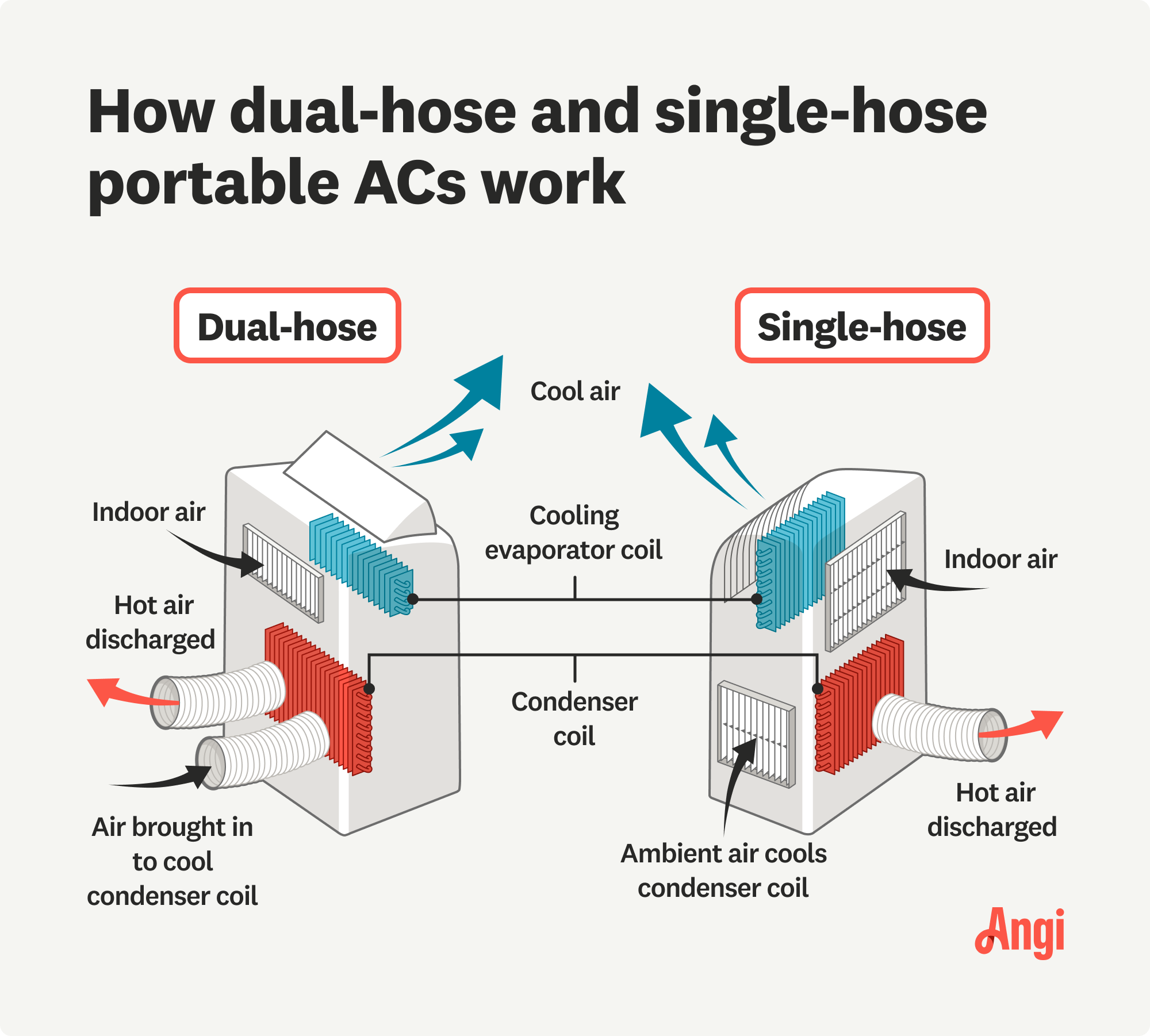
Portable air conditioners cool spaces by drawing in air, cooling it, and expelling warm air. Single-hose models use one hose for this process, while dual-hose models have separate hoses for intake and exhaust. Dual-hose units generally offer better efficiency and faster cooling.
Portable air conditioners are a lifesaver during scorching summer days, but choosing the right model can be a game-changer for your comfort and energy bills. Single-hose and dual-hose models differ primarily in how they handle air intake and exhaust. Understanding these differences can help you make a more informed purchase decision, ensuring you get the best cooling experience.
Air Intake And Exhaust
The key distinction between single-hose and dual-hose models lies in their air intake and exhaust systems. A single-hose model pulls warm air from the room, cools it, and then expels the hot air outside through one hose. This process can create negative pressure, causing warm air to leak into the room from outside. On the other hand, a dual-hose model uses one hose to pull in air from outside to cool the unit and the second hose to expel the hot air. This system maintains a balanced air pressure in the room, minimizing warm air infiltration. Imagine enjoying a consistently cool room without the pesky draft of warm air sneaking in.
Energy Efficiency
Energy efficiency is a critical factor when choosing an air conditioner, as it directly impacts your electricity bill. Single-hose units are generally less efficient because they create negative pressure, which can cause your unit to work harder to maintain the temperature. This extra effort can lead to higher energy consumption. Dual-hose models, with their balanced pressure system, often perform better in terms of energy efficiency. They don’t have to compensate for air leakage, making them more cost-effective over time. Have you ever thought about how a small upgrade could lead to significant savings on your energy bill? Choosing between a single-hose and a dual-hose portable air conditioner can significantly impact your cooling experience and energy costs. Consider your priorities: Are you looking for a quick, budget-friendly fix, or do you want a long-term, efficient solution?
Installation Tips
Installing a portable air conditioner efficiently ensures optimal cooling. Proper setup can maximize performance and energy savings. Follow these installation tips for the best results.
Choosing The Right Location
Select a spot with easy access to a power outlet. Avoid placing the unit near heat sources like stoves. Ensure the location allows good airflow around the air conditioner.
Keep the unit away from direct sunlight. This can help maintain cooler air output. A shaded area can improve efficiency.
Ventilation Setup
Proper ventilation is crucial for portable air conditioners. Use the exhaust hose to vent hot air outside. Ensure the hose is straight to avoid airflow issues.
Check the window or vent kit for a secure fit. A tight seal prevents warm air from entering. Maintain the hose at the recommended length for best results.

Maintenance And Care
Portable air conditioners cool rooms by drawing in warm air, cooling it, and expelling the heat outside. Regular cleaning of filters and coils ensures efficient operation. Proper care extends their lifespan and maintains performance.
Maintaining and caring for your portable air conditioner is crucial for its efficiency and longevity. Proper maintenance ensures that the unit runs smoothly, delivering the cool air you desire. Plus, it can save you from unexpected breakdowns during the hottest days.
Regular Cleaning
Regular cleaning is essential to keep your portable air conditioner in optimal condition. Dust and debris can accumulate in the vents and coils, reducing airflow and efficiency. Wipe down the exterior with a damp cloth weekly to remove dust. Cleaning the air vents every month is also important. Use a vacuum cleaner with a brush attachment to suck up any dust or debris. If you’ve ever been frustrated by a unit that doesn’t cool as it used to, try cleaning the vents thoroughly.
Filter Replacement
The air filter is a crucial component of your portable air conditioner. It captures dust, pollen, and other particles to improve air quality. Check the filter every two weeks and replace it if it’s dirty or clogged. A clean filter helps the unit run efficiently, reducing energy consumption. Many users are surprised by the difference a new filter can make. It can also prevent respiratory issues if you’re sensitive to dust. Taking the time to maintain your portable air conditioner can extend its life and keep your space comfortable. How often do you check your air conditioner? A little regular care can go a long way in ensuring your unit remains reliable.
Advantages And Limitations
Portable air conditioners offer easy installation and mobility, perfect for cooling small spaces. They can be moved from room to room, providing flexibility. Yet, they often produce noise and require regular maintenance, including water drainage. Also, they may not be as efficient as window units for larger areas.
Understanding the advantages and limitations of portable air conditioners helps in making an informed choice. These devices offer flexibility and convenience. Yet, they come with their own set of challenges. Knowing both sides aids in deciding if they suit your cooling needs.
Portability
One of the main benefits is their portability. You can move them from room to room with ease. They usually have wheels, making transportation simple. This is ideal for those who need cooling in different areas.
Cooling Capacity
Portable air conditioners cool small to medium-sized rooms. They are perfect for bedrooms or offices. Check the British Thermal Units (BTUs) for efficiency. Higher BTUs mean more powerful cooling. Yet, they might not cool large spaces well.
Noise Levels
Some units can be quite noisy. This can be a problem in quiet spaces. Noise levels vary between models. Look for units with lower decibel ratings. Quieter models are better for bedrooms and study areas.
Environmental Considerations
Portable air conditioners offer convenient cooling but raise environmental concerns. Understanding these considerations is vital for responsible usage. The energy consumption and eco-friendly options are crucial aspects to explore. These factors help balance comfort with sustainability.
Energy Consumption
Energy consumption impacts the environment significantly. Portable air conditioners typically use more power than window units. This increased usage contributes to higher electricity bills. It also adds to carbon emissions. Choosing energy-efficient models can help mitigate these effects. Look for units with Energy Star ratings. These are designed to consume less electricity. Regular maintenance also enhances efficiency. Clean filters and vents prevent unnecessary energy waste.
Eco-friendly Options
Eco-friendly options reduce environmental impact. Some portable air conditioners use refrigerants that harm the ozone layer. Opt for models with eco-friendly refrigerants. They minimize ozone depletion and greenhouse gas emissions. Dual-hose units are more efficient than single-hose ones. They cool spaces faster, reducing energy use. Smart technology offers another eco-friendly option. Units with programmable thermostats and timers save energy. They adjust cooling based on need, preventing wastage. Investing in these options supports a greener planet.
Frequently Asked Questions
What Is A Portable Air Conditioner?
A portable air conditioner is a movable cooling unit. It can be easily relocated to different rooms. It uses a hose to vent hot air outside. Portable ACs are ideal for temporary cooling needs. They provide flexibility and convenience in cooling spaces.
How Does A Portable Ac Cool A Room?
A portable AC cools a room by extracting warm air. It cools the air using a refrigeration cycle. The unit then releases cool air into the room. Hot air is vented outside through a hose. This process efficiently lowers room temperature.
Are Portable Air Conditioners Energy Efficient?
Portable air conditioners are generally less efficient than window units. They use more energy to cool the same space. It’s important to check the Energy Efficiency Ratio (EER). Choosing a model with a higher EER can save on energy costs.
Proper installation also enhances efficiency.
Can Portable Ac Units Be Used In Any Room?
Portable AC units can be used in most rooms. They require access to an external vent for exhaust. Rooms should have a window or door for venting. Ensure the unit matches the room size for effective cooling. Avoid using in rooms without proper ventilation.
Conclusion
Portable air conditioners offer a convenient cooling solution. Easy to move and use. Perfect for small spaces or temporary setups. They operate by extracting heat and moisture from the air. Hot air is vented outside through a hose. Simple setup with minimal installation.
Efficient for personal cooling needs. Always check unit’s specifications for best results. Regular maintenance ensures optimal performance. Understanding how they work helps in choosing the right model. Stay cool and comfortable with the right portable air conditioner. Enjoy a cooler space without complex installations.
Keep your environment pleasant and refreshing.