
Is your rectangular living room feeling a bit awkward or cramped? You’re not alone.
Arranging furniture in a long, narrow space can be tricky, but with the right approach, you can turn your living room into a cozy, stylish haven. Imagine walking into your home and instantly feeling relaxed because every piece of furniture fits perfectly, creating flow and balance.
You’ll discover simple, effective tips to arrange your furniture in a way that maximizes space and comfort. Ready to transform your living room into the place you love to be? Let’s get started!
Measure Your Space
Before you place a single piece of furniture, measuring your rectangular living room is essential. Without accurate measurements, you risk overcrowding or leaving too much empty space, both of which can ruin the room’s flow. Taking the time to measure helps you visualize how furniture will fit and interact with the space.
Calculate Room Dimensions
Start by measuring the length and width of your living room. Use a tape measure and write down the exact numbers in feet or meters. Don’t forget to include any alcoves, nooks, or irregular spaces that could affect furniture placement.
Note the ceiling height too, especially if you plan to add tall furniture or decorative elements. This gives you a full picture of the space you’re working with. Have you ever bought a couch only to realize it doesn’t fit through the door? Taking measurements beforehand saves you from that frustration.
Identify Focal Points
Every living room has a natural focal point. It might be a fireplace, a large window, or a television. Identifying this spot guides where you arrange your main furniture pieces, like sofas and chairs, to create a balanced and inviting setup.
Look around your room and ask yourself: where do you want the eye to land first? Align your seating to face or complement this area. This simple step can transform how comfortable and functional your space feels.
Choose The Right Furniture
Choosing the right furniture for a rectangular living room can make all the difference in how your space feels and functions. The right pieces balance the room’s shape without overwhelming it. You want furniture that fits well, serves your needs, and enhances your style.
Select Scaled Pieces
Think about the size of your living room before buying furniture. Oversized sofas or bulky chairs can make a rectangular room feel cramped and narrow. Instead, opt for scaled pieces that complement the room’s length and width.
For example, a slim-profile sofa paired with a couple of sleek armchairs can open up walkways and create a cozy seating area. Don’t be afraid to measure your space and compare it with furniture dimensions. This helps avoid surprises and keeps your room feeling balanced.
Multi-functional Options
Multi-functional furniture is a smart choice for rectangular living rooms where space might be limited. Pieces like ottomans with storage, sofa beds, or coffee tables with shelves add extra utility without crowding the room.
Imagine having a coffee table that stores blankets or magazines. It saves space and keeps your living room tidy. What multi-use furniture could simplify your daily routine and free up more room for relaxing?
Plan Traffic Flow
Planning traffic flow in a rectangular living room is essential for comfort and usability. It helps people move easily without bumping into furniture. A well-planned flow makes the space feel open and welcoming. Focus on how people enter, exit, and navigate around the room.
Create Clear Pathways
Clear pathways guide movement through the room. Keep main routes free from furniture or obstacles. Aim for at least 2 to 3 feet wide paths for easy walking. Arrange sofas and chairs to face each other or the room’s focal point. This layout encourages social interaction and avoids blocking walking space.
Use rugs or lighting to define these pathways visually. This subtle cue helps visitors understand where to walk. Avoid placing large furniture pieces near doorways or windows to maintain clear access points.
Avoid Clutter Zones
Clutter zones block smooth movement and make the room feel cramped. Remove extra chairs or tables that crowd the space. Store items like magazines, toys, or blankets in baskets or shelves. Keep surfaces clear to prevent distractions and tripping hazards.
Arrange furniture with enough space around each piece. This spacing creates breathing room and keeps traffic flowing. Avoid placing too many items in narrow parts of the room. Prioritize open areas for easy navigation and a relaxed atmosphere.
:max_bytes(150000):strip_icc()/designer-digs-5209106-recirc-890366b347c445a0bdd3d10221f2b1fd.jpg)
Arrange Seating Areas
Arranging seating areas in a rectangular living room requires careful planning. The goal is to create a cozy and functional space for relaxation and socializing. Thoughtful placement enhances flow and comfort. It also makes the room feel balanced and inviting.
Anchor With A Rug
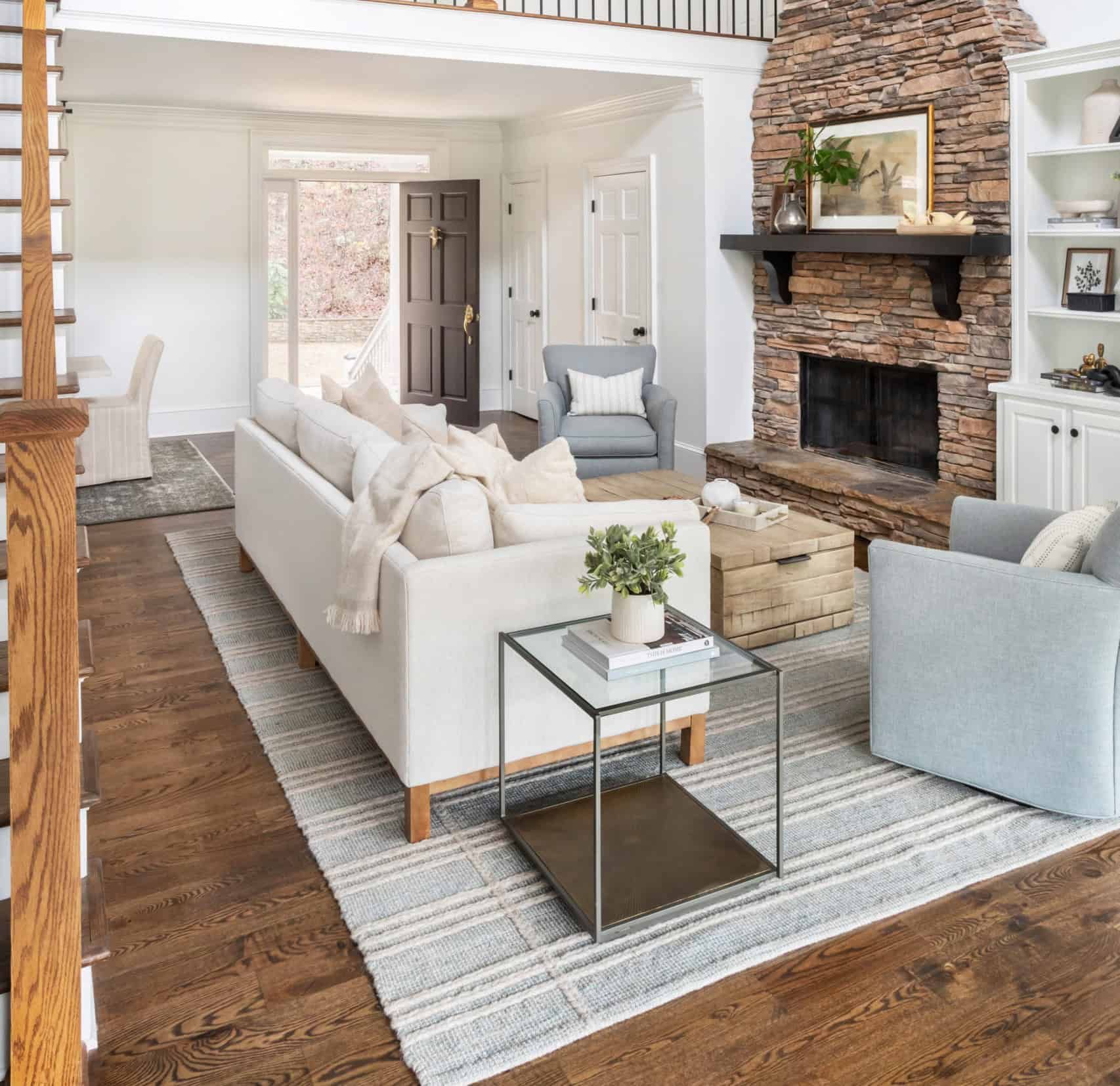
A rug helps define the seating area visually. Choose one that fits the size of your furniture group. It should be large enough to hold all main pieces, or at least the front legs of sofas and chairs.
The rug adds warmth and texture to the room. It also creates a clear boundary for the seating zone. Pick a color and pattern that complements your decor. This simple step can tie the space together beautifully.
Group For Conversation
Arrange sofas and chairs facing each other. Keep the distance close enough for easy talking, about 3 to 4 feet apart. Avoid lining furniture against walls, which can feel cold and distant.
Include a coffee table or ottoman in the center. It provides a place for drinks and adds focus. Arrange side tables near seating for convenience. This setup encourages interaction and makes the room welcoming.
Balance The Room
Balancing a rectangular living room is key to creating a comfortable and inviting space. Without balance, the room can feel awkward or overly crowded on one side. Striking the right balance helps your furniture feel connected and the space appear harmonious.
Distribute Furniture Evenly
Place your largest pieces, like sofas or armchairs, so they don’t all crowd one side of the room. Spread out seating options to encourage conversation and easy movement. Think about how you walk through the space—avoid blocking pathways with bulky furniture.
Try to keep similar-sized pieces opposite each other or at least spaced evenly. If you have a big sofa on one side, balance it with a pair of chairs or a loveseat across the room. This stops one side from feeling too heavy or empty.
Use Symmetry And Asymmetry
Symmetry creates calm and order. Place matching chairs or tables on either side of a focal point like a fireplace or TV. This feels natural and pleasing to the eye.
But don’t shy away from asymmetry—it can add energy and interest. For example, pair a large sofa with a single accent chair and a tall floor lamp on the other side. This approach keeps things balanced without being too predictable.
Ask yourself: Does the room feel stable or like it could tip over? Adjust your layout until it feels just right for your lifestyle and style.
Incorporate Storage Solutions
Finding smart storage solutions can transform your rectangular living room from cluttered to calm. The right storage not only keeps things tidy but also enhances the room’s flow and style. Think about your daily habits and what items you need close at hand—this will guide your choices and make your space work harder for you.
Built-in Options
Built-in storage feels like a natural part of your living room. It saves space by fitting snugly against walls, leaving the middle of the room open for movement. Consider floor-to-ceiling shelves or cabinets around a TV unit to maximize vertical space without crowding the floor.
Have you ever noticed how built-ins can make a room feel more polished? They often include hidden compartments or drawers, perfect for stashing remote controls, books, or board games. Plus, customizing these units lets you match your décor perfectly.
Freestanding Units
Freestanding storage is flexible and easy to rearrange when you want a fresh look. Look for pieces like stylish bookcases, storage ottomans, or sideboards that double as display areas and storage spots. These options let you add personality and functionality without permanent changes.
Think about using baskets or bins inside freestanding units to keep smaller items organized. This approach keeps clutter out of sight but easily accessible. What’s one item you always wish had a better home in your living room?
Add Lighting And Accessories
Lighting and accessories bring life and warmth to a rectangular living room. They enhance space, create mood, and highlight furniture arrangements. Thoughtful lighting and well-chosen decor complete the look and make the room inviting.
Layered Lighting
Use multiple light sources at different levels. Combine overhead lights, floor lamps, and table lamps. This approach avoids harsh shadows and brightens the room evenly. Adjustable lighting lets you control the mood and focus areas.
- Ceiling lights for general illumination
- Task lighting near seating for reading
- Accent lights to highlight artwork or plants
Dimmer switches add flexibility. They help create cozy evenings or lively gatherings. Layered lighting makes the rectangular space feel balanced and welcoming.
Complement With Decor
Accessories add personality and texture to the room. Use rugs, cushions, and curtains to soften the space. Choose colors that match or contrast the furniture for visual interest. Mirrors reflect light and make the room appear larger.
- Place a large rug under the seating area
- Add throw pillows with different patterns
- Hang art or photos on long walls
- Use plants to bring freshness and color
Decor pieces tie the room together and highlight your style. They enhance the furniture arrangement and create a comfortable atmosphere.

Optimize Small Rectangular Rooms
Small rectangular living rooms need smart planning to feel spacious and cozy. The right furniture and colors can open up the space. This makes the room more inviting and functional. Focus on choices that create lightness and flow.
Use Light Colors
Light colors make a small room look bigger. Shades like white, cream, and soft pastels reflect more light. This brightens the space and reduces shadows. Painting walls in light tones helps the room feel open and airy.
Light-colored curtains and rugs also add to this effect. They keep the room from feeling heavy or crowded. Use simple patterns or solid colors to maintain calmness.
Choose Slim Furniture
Slim furniture takes up less space but still offers comfort. Look for pieces with thin legs and narrow arms. This style allows light to pass through, keeping the room from feeling boxed in.
Multi-functional furniture, like ottomans with storage, helps save space. Avoid bulky sofas or wide tables that crowd the room. Keep pathways clear for easy movement and a neat look.
Frequently Asked Questions
How To Start Arranging Furniture In A Rectangular Living Room?
Begin by measuring the room and identifying focal points like windows or a fireplace. Plan a layout that promotes flow and maximizes space. Start with larger pieces, then add smaller items. Keep pathways clear to ensure easy movement.
What Furniture Layout Suits A Narrow Rectangular Living Room?
A linear or L-shaped arrangement works best. Place sofas and chairs against longer walls. Use slim, multi-functional furniture to save space. Avoid overcrowding to keep the room open and inviting.
How To Create Balance In A Rectangular Living Room?
Distribute furniture evenly along the length and width. Use rugs and lighting to anchor seating areas. Mix tall and low pieces to maintain visual interest. Balance colors and textures for harmony.
What Are Space-saving Furniture Tips For Rectangular Living Rooms?
Choose pieces with built-in storage like ottomans or coffee tables. Use wall-mounted shelves to free floor space. Opt for furniture with slim profiles. Keep décor minimal to avoid clutter.
Conclusion
Arranging furniture in a rectangular living room can feel tricky. Keep pathways clear for easy movement. Use rugs to define seating areas. Place larger pieces against longer walls to open space. Balance the room by spreading furniture evenly. Add small tables near seats for convenience.
Lighting helps create a cozy feel. Try different layouts until the room feels right. Simple steps can make your space both useful and inviting. Enjoy making your living room comfortable and stylish.